Beating Upstate Humidity: Your Guide to Better Indoor Air Quality
Living in The Upstate brings a lot of perks, from beautiful mountain views to vibrant local communities. However, as any long-time resident knows, our signature Upstate humidity can make the summer months feel incredibly heavy. When that thick, moisture-laden air creeps into your home, it does more than just make you feel sticky and uncomfortable. It can force your cooling system to work overtime, drive up your monthly utility bills, and severely impact your home's indoor air quality.
At RDS Mechanical & Construction, we spend a lot of time talking with homeowners who are frustrated by high summer cooling bills and spaces that never quite feel cool enough. Many people assume their air conditioner is broken, when in reality, the system is simply losing the battle against indoor moisture. If you are tired of setting the thermostat lower only to still feel warm and clammy, it is time to look at the relationship between humidity, temperature, and the air you breathe every day.

Recognizing the Signs of High Humidity Inside Your Home
Before you can solve an indoor air quality issue, you have to know what to look for. The signs of high humidity inside the home are often subtle at first but can quickly escalate if left unaddressed. One of the most common indicators is condensation forming on the inside of your windows, particularly in the mornings. You might also notice a lingering musty odor in certain rooms, doors that suddenly stick in their frames, or wood floors that begin to cup or warp slightly.
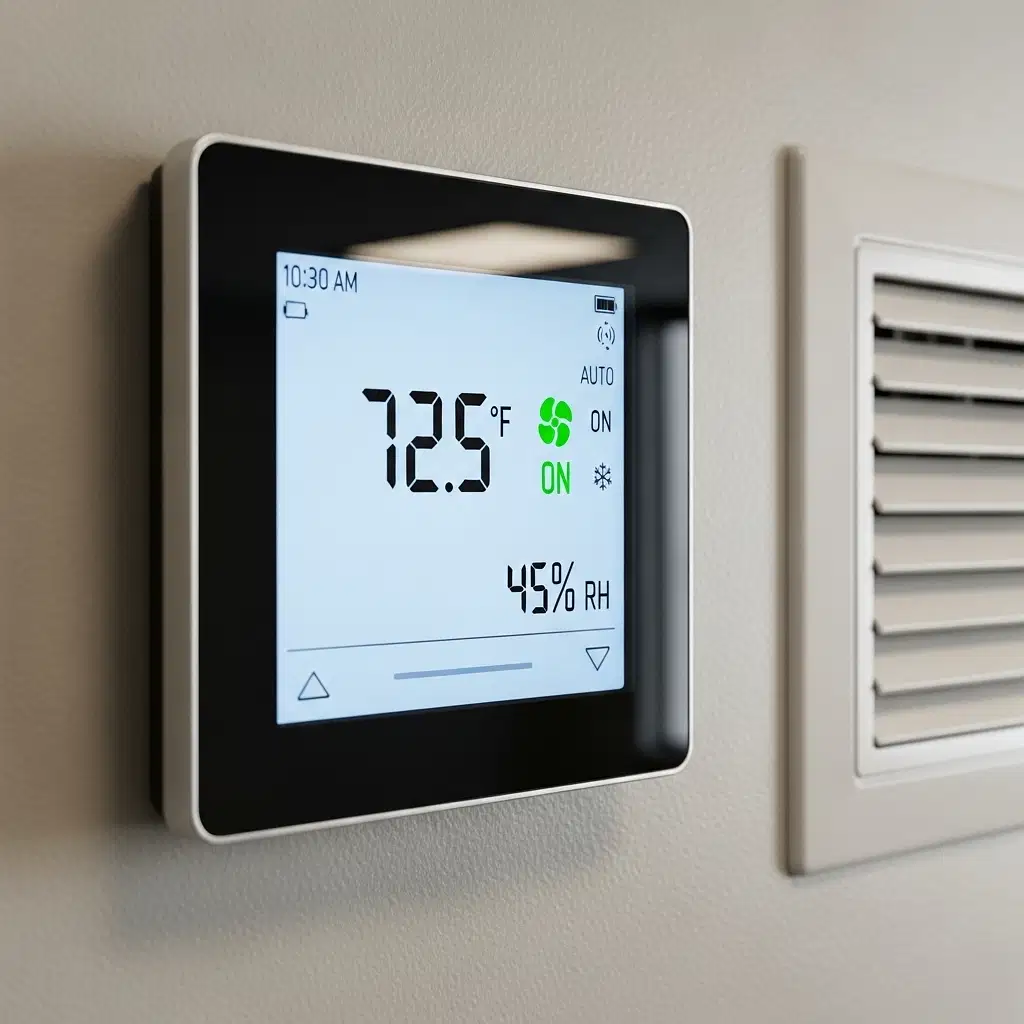
From a comfort standpoint, high humidity prevents your body's natural cooling process—sweating—from working effectively. This is why a house that is 72 degrees can feel perfectly comfortable in the winter but completely stifling in the middle of July. When homeowners experience this, their first instinct is to drop the thermostat setting. Unfortunately, this places immense strain on the HVAC system and causes energy bills to skyrocket without actually solving the root of the problem. If you constantly feel the need to lower your temperature setting just to find relief, moisture is likely the real culprit.
How Your Air Conditioner Handles Moisture
We often get asked how to lower indoor humidity levels with an AC unit alone. It is a great question because your air conditioner actually plays a vital role in dehumidification. As warm indoor air is pulled across the cold evaporator coils inside your system, the moisture in that air condenses into water and drains away. This naturally dries out the air before it is pushed back into your living spaces.
However, standard air conditioners are primarily designed to cool the air, not to act as dedicated moisture removers. During periods of extreme humidity, the air conditioner simply cannot run long enough to pull all the excess water out of the air before the thermostat registers that the room has reached the target temperature and shuts the system off. This frequent cycling can leave you with cold but clammy air. If you are dealing with an aging unit or poorly designed ductwork, you might even find yourself wondering why your system is blowing warm air or struggling to keep up during peak afternoon heat. Making sure your current system is operating at peak efficiency is the first step, which is why routine maintenance and professional mechanical services are so important for getting the most out of your existing equipment. You can learn more about our comprehensive approach to system longevity by exploring our mechanical services.

The Whole House Dehumidifier vs. Air Conditioner Debate
When standard cooling isn't enough to tackle the moisture load, homeowners often start looking at dedicated solutions. This brings up a common comparison: the whole house dehumidifier vs air conditioner.
While your AC cools your home and removes some moisture as a byproduct, a whole-house dehumidifier has one specific job: pulling moisture out of the air. Installed directly into your existing HVAC ductwork, a whole-house dehumidifier works in tandem with your cooling system. It measures the moisture levels in the air and activates whenever humidity rises above your ideal setting, typically around 45 to 50 percent.
Because the dehumidifier handles the heavy lifting of moisture removal, your air conditioner doesn't have to work nearly as hard. This means you can comfortably set your thermostat a few degrees higher in the summer, saving on energy costs while actually feeling cooler. It also extends the lifespan of your cooling equipment by preventing the short-cycling and overwork that leads to premature breakdowns.
Advanced Indoor Air Quality Solutions for High Pollen Seasons
Humidity isn't the only challenge we face in this region. The beautiful spring and summer months also bring incredibly high pollen counts, which can quickly make their way indoors and trap allergens inside your tightly sealed home. When excess moisture mixes with high pollen, dust mites, and pet dander, it creates an environment where indoor air quality plummets.
To combat this, modern HVAC technology offers incredible solutions that integrate seamlessly with your ductwork. High-efficiency HEPA filtration systems can capture microscopic particles before they circulate through your living spaces. Additionally, UV air purifiers installed inside the ductwork or over the evaporator coil can neutralize airborne contaminants, mold spores, and bacteria that thrive in damp environments.
Upgrading your home's indoor air quality doesn't always require a complete system overhaul. Often, targeted upgrades can transform the way your home feels and breathes. For older homes or systems that are struggling to keep up with modern efficiency standards, exploring professional HVACR system retrofits can provide the perfect balance of improved air quality and significant energy savings.
Take Control of Your Indoor Comfort
You do not have to settle for a home that feels stuffy, damp, or dusty. By understanding how your HVAC system manages moisture and taking proactive steps to improve your indoor air quality, you can create a truly comfortable sanctuary for your family, no matter how oppressive the weather gets outside.
At RDS Mechanical & Construction in Greenwood, we are committed to helping our neighbors find reliable, energy-efficient solutions to their toughest heating and cooling challenges. Whether you need a seasonal system tune-up to prepare for the summer heat, or you are interested in installing a whole-home dehumidifier to finally take control of your indoor air, our experienced technicians are here to help. Contact us today to schedule a consultation and discover how our comprehensive maintenance programs and installation services can elevate your home's comfort all year long.